 HoardIQ
Small Apartment Storage: Organize More Without More Furniture
The Small Apartment Storage Trap
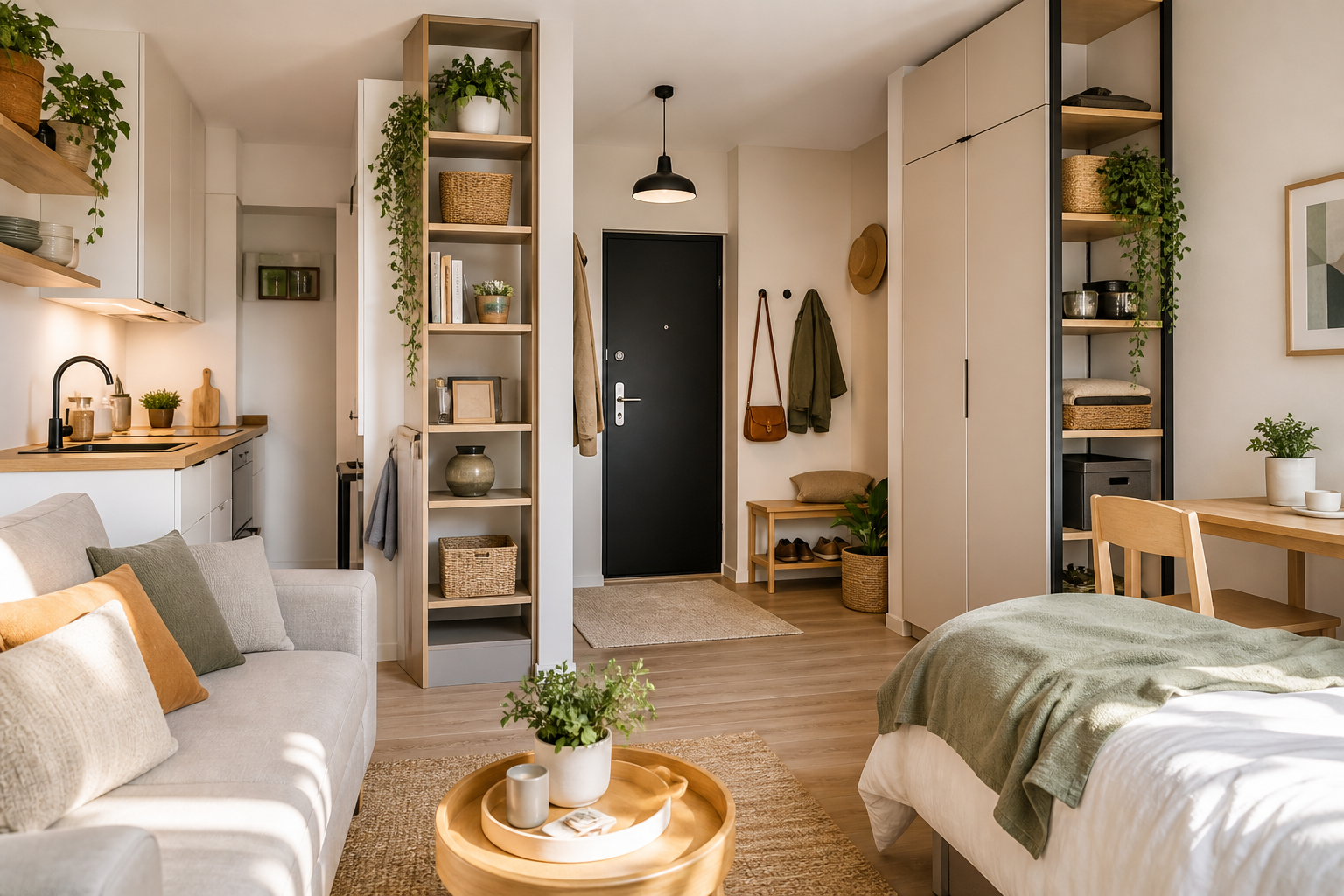
Walk into a studio or one-bedroom apartment and the math is brutal: you have roughly 400–700 square feet of living space and a lifetime of belongings. Every flat surface becomes a landing zone. Closets overflow. Under-bed space fills with mystery boxes you have not opened in two years.
The standard advice — "buy more organizers" — makes it worse. More bins in a small apartment means more visual clutter, more things to move when you need something, and more anxiety about what is inside each container.
The real solution is not more furniture. It is using the space you already have more intelligently — and knowing exactly what you own so nothing gets lost in the process.
The Three Principles of Small-Space Storage
Before buying a single organizer, internalize these three rules:
1. Go vertical, not horizontal
Floor space is precious. Wall space is underused. In a small apartment:
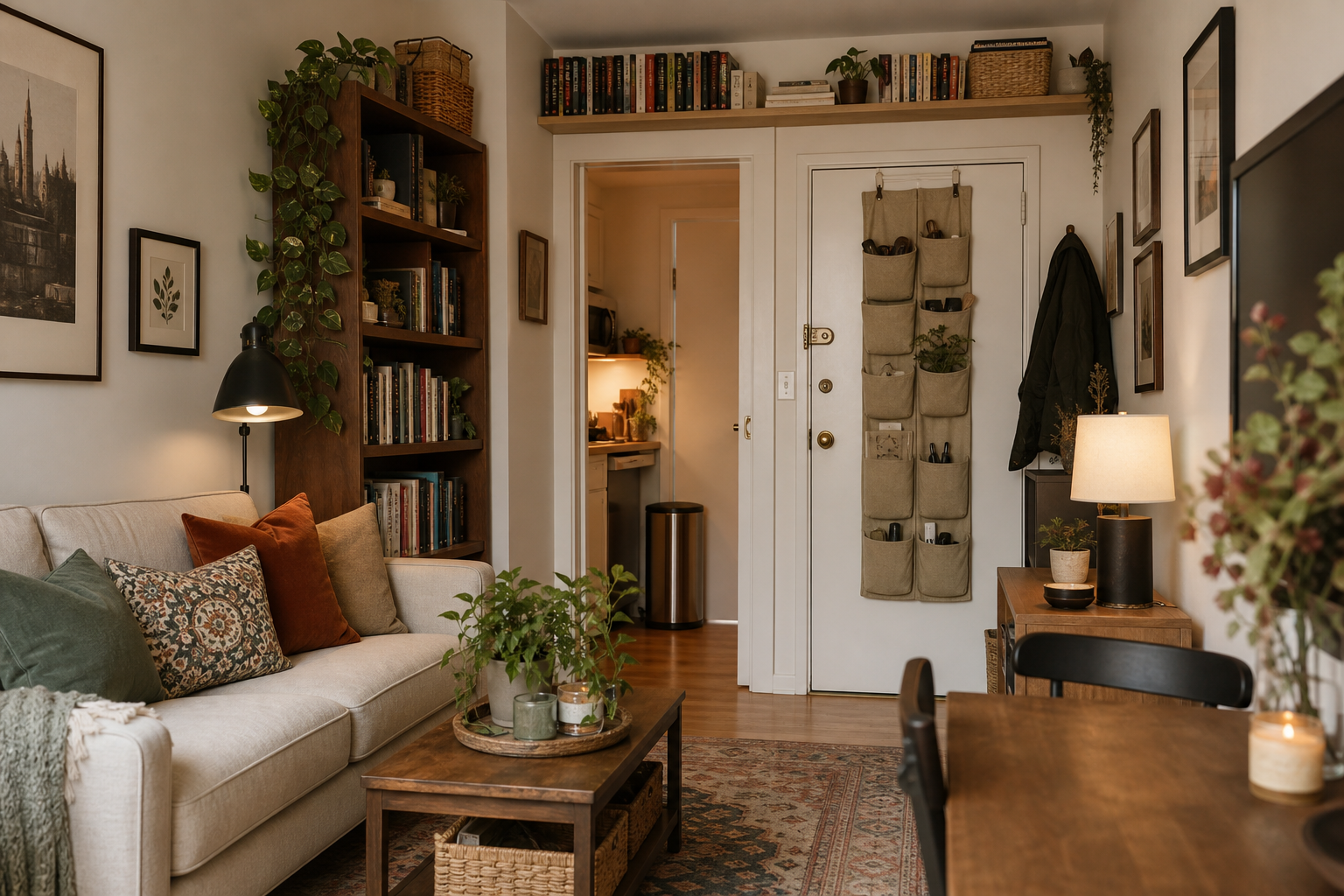
- Shelving above doorways — the 12 inches above a door frame can hold bins of seasonal items
- Over-the-door organizers — shoes, cleaning supplies, accessories
- Tall narrow shelving — a 12-inch-wide shelf unit holds more than a wide low one
- Stackable containers — same footprint, double the capacity
2. Every item earns its spot
In a large home, you can afford "just in case" storage. In a small apartment, every item must justify the space it occupies. If you have not used it in 12 months and it is not seasonal, it goes.
This is where a home inventory helps: when you can see everything you own in one searchable list, duplicate and forgotten items become obvious.
3. Label everything, search everything
In a small apartment, items hide in plain sight — inside identical boxes, behind other boxes, at the back of a high shelf. Labels fix the physical problem. A searchable inventory fixes the mental one.
When you know that your winter boots are in Box 3 on the top closet shelf, you reach directly for them instead of pulling everything down.
Room-by-Room Tactics
Entryway (the make-or-break zone)
Your entryway sets the tone for the entire apartment. If it is cluttered, everything feels cluttered.
| Tactic | What it solves | Cost |
|---|---|---|
| Wall-mounted key hook + small shelf | Keys, mail, daily carry items | Low |
| Slim shoe rack (vertical, not horizontal) | Shoe pile by the door | Low |
| Over-door coat hooks | Jackets without a coat closet | Low |
| Small basket for "in/out" items | Sunglasses, transit pass, dog leash | Low |
Inventory tip: Catalog your daily carry items (keys, wallet, transit pass) so you always know where they should live.
Kitchen (the space-eating room)
Kitchens in small apartments are often galley-style — long and narrow with limited cabinet space.
Quick wins:
- Shelf risers — double the usable space on each cabinet shelf
- Magnetic strips for knives and spice tins — frees an entire drawer
- Under-shelf baskets — clip-on storage below existing shelves
- Vertical pan storage — pans on their side, not stacked
- Door-mounted spice rack — uses the inside of the cabinet door
What to avoid: Single-use gadgets (garlic press, avocado slicer, egg separator). In a small kitchen, every tool must earn its drawer space. Check your inventory before buying anything new.
Bedroom closet (the hidden goldmine)
Most apartment closets use 50% of their vertical space. The top shelf and floor area are wasted.
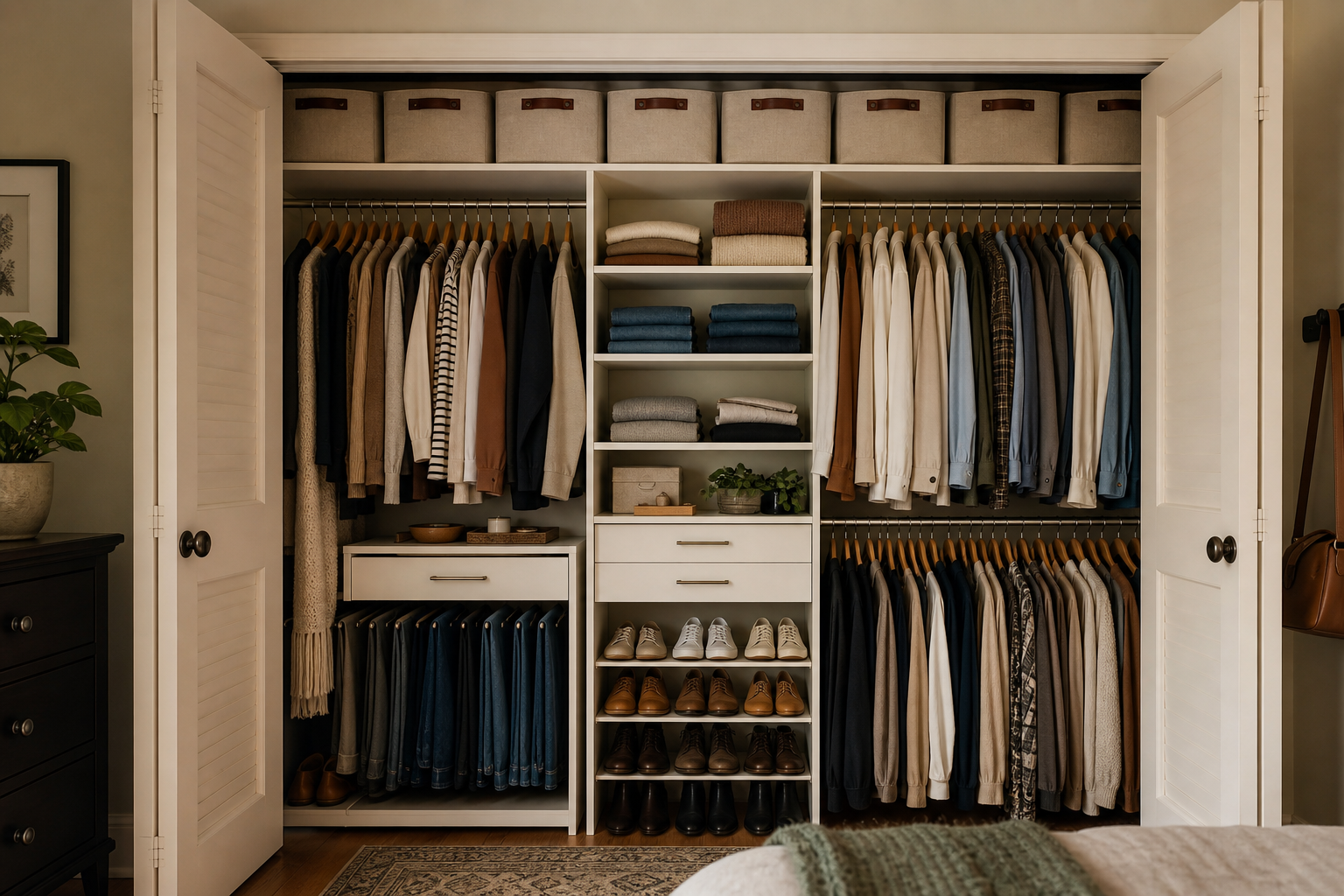
Strategy:
- Measure your closet — height, width, depth. Buy organizers that fit exactly.
- Zone the vertical space:
- Eye level: daily clothing
- Low: shoes and heavy items
- High: seasonal, rarely used, luggage
- Use uniform bins on the top shelf — same size, labeled, photographed
- Vacuum bags for off-season clothing — compress bulky items to one-third their size
Inventory tip: Photograph the contents of each bin when you pack it. When you need your summer clothes in March, search "summer bin" instead of opening every container.
Under-bed and hidden storage
The space under a bed is 25–40 square feet of free storage — often completely unused or filled with unlabeled chaos.
Best uses:
- Seasonal clothing (vacuum bags)
- Extra linens and towels
- Luggage (store items inside the suitcases)
- Rarely used sports or hobby equipment
Rules:
- Use low-profile rolling bins with lids (not open boxes that collect dust)
- Label every bin on the visible side
- Record bin contents in your inventory
- Pull out and review once per season
Five Quick Wins You Can Do This Weekend
| # | Action | Time | Impact |
|---|---|---|---|
| 1 | Install over-door organizers on bathroom and closet doors | 20 min | Frees 2–3 shelves |
| 2 | Add shelf risers to kitchen cabinets | 15 min | Doubles shelf capacity |
| 3 | Vacuum-bag off-season clothes | 30 min | Frees half a closet |
| 4 | Label every bin and box with contents | 30 min | Eliminates mystery containers |
| 5 | Catalog top 20 items in HoardIQ | 20 min | Makes everything searchable |
Total time: under two hours. Total impact: feels like you gained a closet.
When to Stop Buying Organizers
There is a tipping point where more organizers create more problems:
- You have organizers inside organizers — nesting bins three deep means you will never find anything
- You cannot remember what is in each container — labels help, but a searchable inventory helps more
- You are organizing things you should donate — no bin makes unused items worth keeping
- Organizing replaces deciding — buying a new shelf system feels productive but avoids the harder question of what to let go
The shift from "buy more storage" to "know what I have" is the unlock for small apartments. When every item is photographed, named, and located, you stop over-buying organizers and start using the space you already have.
The Searchable Small Apartment
The ultimate small-apartment superpower is not a bigger closet — it is knowing in three seconds where anything lives:
- "Where are my tax documents?" → Search → Filing box, top closet shelf
- "Do I already own a travel adapter?" → Search → Yes, bathroom drawer
- "What is in storage bin 4?" → Search → Holiday decorations and spare cables
This is what transforms a cramped apartment into a functional one. You are not adding square footage. You are adding clarity.
Start With One Room
Pick the room that frustrates you most — usually the entryway or the bedroom closet. Spend one hour applying the tactics above. Catalog what you organize so the system survives beyond the weekend.
Small apartments reward precision. Every inch matters. Every item needs a known home. Build the inventory as you organize, and the apartment stops feeling small.
HoardIQ helps small-apartment dwellers find anything in seconds — photograph items, assign locations, and search your entire home from your phone. Try it free.
Ready to organize your home?