 HoardIQ
Moving House Checklist: How to Document Every Item Before You Pack
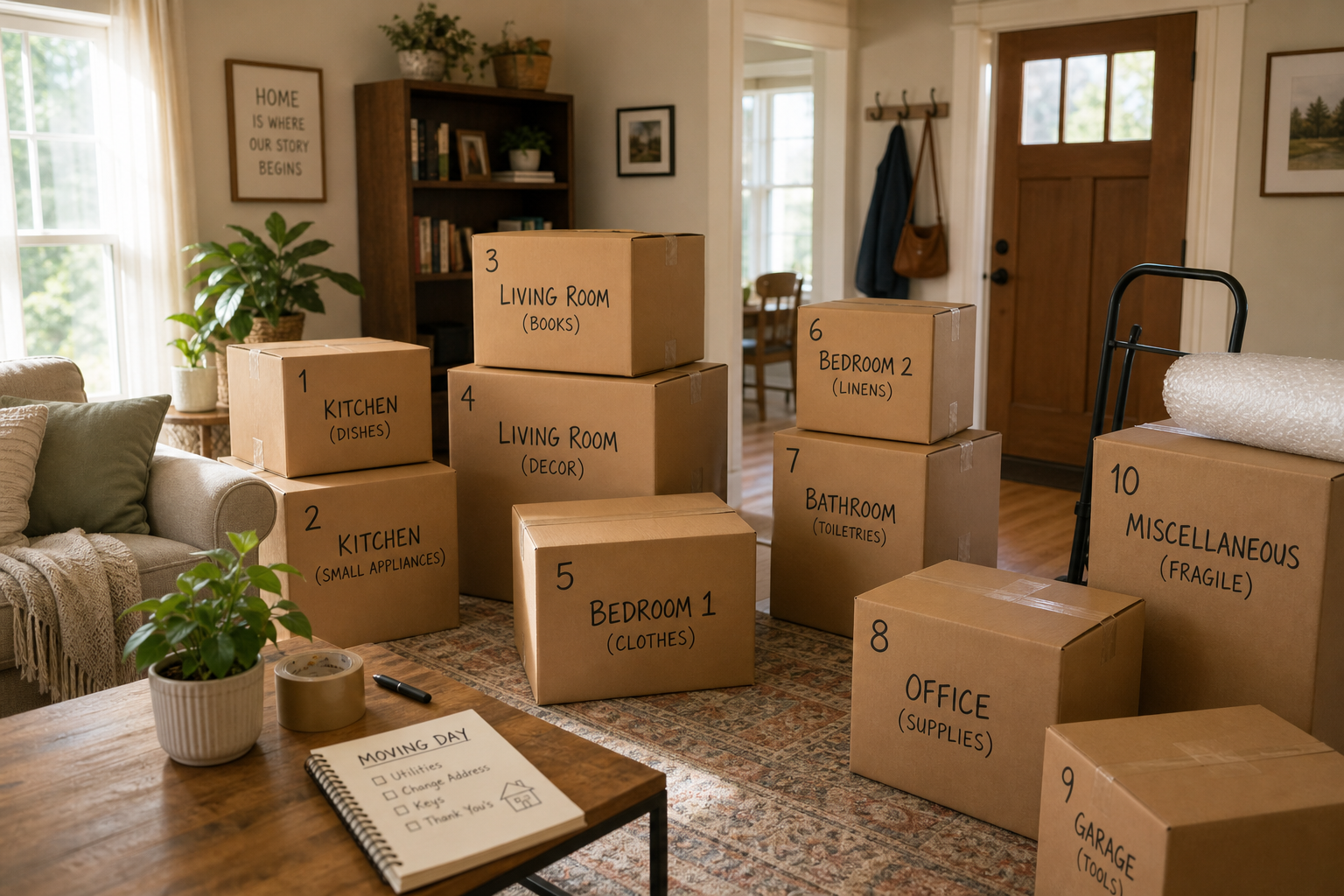
The Messy Truth About Moving
Moving is one of life's most stressful events. Between packing, logistics, addresses, utilities, and the emotional weight of leaving a home, the last thing anyone wants is to discover that something valuable went missing during the move — or arrived damaged with no way to prove what it was.
Most moving checklists focus on the logistics: boxes, tape, truck, address change. Almost none address the inventory problem: what exactly do you own, and how do you prove it survived the move?
This checklist adds that missing layer. A home inventory before you pack is the difference between moving chaos and moving clarity.
Why You Need an Inventory Before Moving
1. Prove Ownership for Insurance
Moving companies offer basic liability coverage, but it only covers a fraction of your belongings' actual value. If you want full-value protection, you need to prove what you owned and what it was worth.
Without an inventory:
- "I had a $3,000 sectional sofa" → Prove it
- "My kitchenware was worth $1,200" → Itemize it
- "My tools are missing" → Which ones?
With an inventory, all of this is documented with photos, values, and locations.
2. Track Boxes During Transit
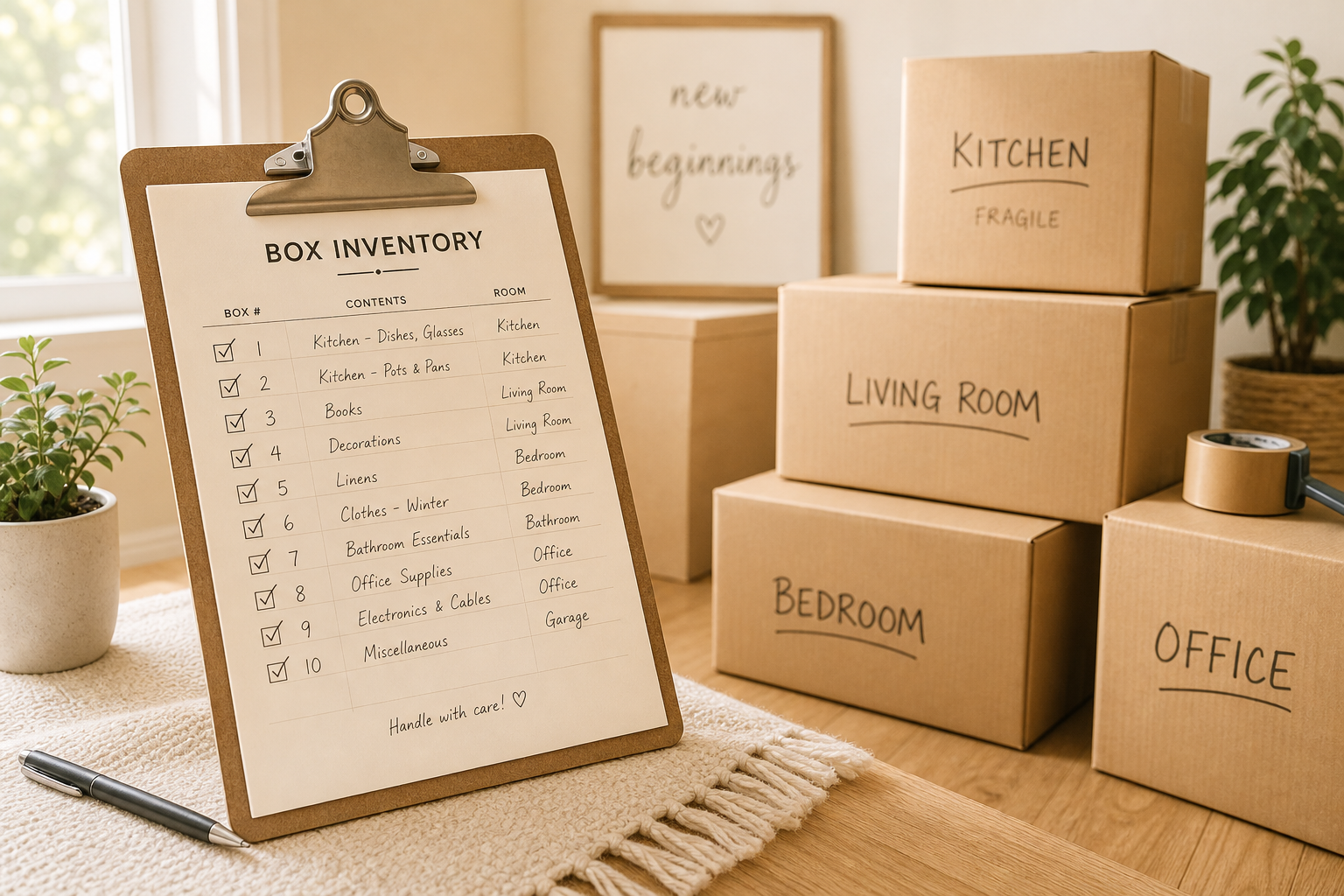
A numbered box system paired with an inventory tells you exactly what is in each box:
- Box 12: Kitchen — top shelf items (4 items, value $340)
- Box 13: Kitchen — bottom shelf items (6 items, value $180)
- Box 14: Living room — bookshelf (12 items, value $95)
If Box 14 is missing when the truck arrives, you know exactly what was in it and can file a specific claim.
3. Settle In Faster
After the move, you face the reverse problem of packing: unpacking. An inventory lets you:
- Prioritize which boxes to open first (essentials vs. seasonal)
- Place items in their new locations accurately
- Avoid the "mystery box" syndrome (opening boxes months later wondering what is inside)
- Decide what to keep, donate, or discard before you unpack, not after
4. Catch Losses Early
Moving companies typically allow 30 days to file damage or loss claims. Without an inventory, you might not even notice something is missing until months later — past the claim window. A pre-move inventory lets you do a rapid post-move audit: compare what you packed to what arrived.
The Pre-Move Inventory Checklist
Phase 1: Setup (1–2 weeks before packing)
- Choose your inventory tool — HoardIQ works well because it supports hierarchical location tracking (home → room → storage unit → section → item) and photo evidence
- Create your new home in the app — set up rooms and storage units at your destination
- Set a packing schedule — one room per day is realistic; one room per hour is not
- Gather supplies — boxes, labels, markers, phone charger for photos
Phase 2: Room-by-Room Inventory (3–5 days before packing)
Work through each room systematically:
Kitchen
- Open every cabinet and drawer
- Photograph contents and record items
- Note items going to donations vs. the new home
- Flag high-value items (stand mixer, knife set, cookware)
Living Room
- Catalog electronics (TV, speakers, gaming consoles, remotes)
- Document furniture dimensions (useful for new-home layout planning)
- Record media collections (books, vinyl, DVDs)
- Note decorative items and art
Bedrooms
- Inventory clothing by category (keep/donate/sell)
- Document jewelry and accessories
- Record electronics and personal items
- Note furniture and bedding
Garage / Storage
- Photograph tools and equipment
- Catalog seasonal items
- Record garden and automotive supplies
- Flag hazardous materials (paint, chemicals — some cannot be moved by movers)
Bathrooms
- Document medications and their quantities
- Note high-end toiletries or appliances
- Record towel and linen counts
Phase 3: Packing Day
- Label every box with a number and room
- Record box contents in your inventory (use "section" as the box number)
- Place high-value items in a personal vehicle, not the moving truck
- Take final photos of packed boxes before sealing
- Generate a packing summary from your inventory
Phase 4: Post-Move Audit
- Cross-reference arriving boxes with your inventory
- Open high-priority boxes first (kitchen essentials, toiletries, bedding)
- Mark items as "placed" as you unpack them into new locations
- Note any missing or damaged items immediately
- File claims within 30 days if anything is missing or damaged
- Update your inventory with new home locations
The Box Tracking System
The most effective system for tracking boxes during a move:
- Number every box on at least two sides
- Record the box number in your inventory as the "section" or "location" for each item
- Create a box manifest: a summary list of what is in each box and its total value
- Keep the manifest accessible — on your phone, not in a box
When the truck arrives:
- Check off each box number as it comes off the truck
- Any missing box numbers → file a claim immediately with your manifest
- Any damaged boxes → photograph before opening, note contents against inventory
Moving With Children or Pets
If you are moving with a family, add these inventory steps:
- Children's rooms: Inventory toys, books, and special items separately — kids notice when their favorite toy is missing and you need to find it fast
- Pet supplies: Record food, medications, toys, and equipment — you do not want to hunt for a pet's medication on night one
- Sentimental items: Photos, heirlooms, and keepsakes should be inventoried with extra detail (condition notes, historical context) because insurance values for sentimental items require documentation
What to Do With Items You Are Not Moving
Moving is the best time to declutter. Your inventory makes this decision easier:
- Keep: Items you use regularly or that have high value
- Donate: Good condition items you have not used in 12+ months
- Sell: High-value items you no longer need (list them with photos from your inventory)
- Discard: Broken or expired items
Record the disposition of each item in your inventory so you have a clean record when you arrive at the new home.
Settling Into the New Home
After the move, your inventory becomes the foundation of your new home organization:

- Place items by section — assign each item to its new room, storage unit, and section
- Update locations as you rearrange
- Generate a new-home overview — see your complete inventory organized by the new layout
- Start fresh — any items not yet inventoried are new additions to catalog
The transition from old home to new home is smooth because your inventory was the bridge. Nothing is lost. Nothing is forgotten. Everything has a place.
The Bottom Line
Moving is stressful enough without the added anxiety of wondering where your belongings are or whether you can prove what you owned. A pre-move inventory takes 2–4 hours of your time and saves you days of post-move chaos.
Document before you pack. Track every box. Audit when you arrive. Your move will be the most organized one you have ever done.
HoardIQ tracks every item through your move with photo evidence, hierarchical location mapping, and searchable inventory. Start your pre-move inventory and move with confidence.
Ready to organize your home?